
How to Reduce the Risk of Wildfires and Protect Your Property or Business During Extreme Heat
The UK is experiencing increasingly intense periods of hot, dry weather. While wildfires are often associated with countries such as Australia, Greece or the United States, the risk here in the UK is very real, especially during prolonged heatwaves, drought conditions and periods of high wind.
For businesses, landlords, schools, care homes, visitor attractions and property managers, wildfire prevention is not simply an environmental concern. It is part of a wider duty to protect people, buildings, outdoor spaces, neighbouring properties and business continuity.
A fire can start from something as small as a discarded cigarette, a barbecue, broken glass or poorly managed outdoor waste. In hot, dry conditions, it can spread rapidly through grass, hedgerows, woodland, stored materials and nearby structures.
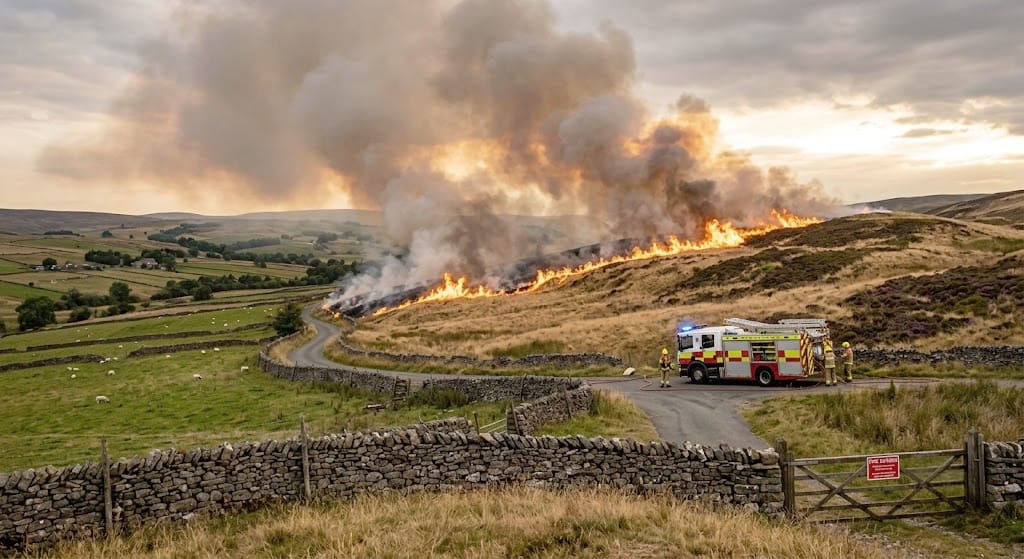
Why wildfire risk is increasing in the UK
Extreme heat dries out vegetation, grass, leaves, shrubs and timber. Once these materials lose moisture, they become much easier to ignite.
In built-up and semi-rural areas, the risk can be increased by:
- Dry grass and unmanaged vegetation close to buildings
- Outdoor smoking areas
- Disposable barbecues and fire pits
- Waste storage areas
- Timber fencing, decking, sheds and outbuildings
- Poorly maintained grounds
- Litter, especially glass bottles
- Electrical equipment, outdoor lighting or temporary power supplies
- Hot works, machinery and maintenance activity
For sites with high footfall, vulnerable occupants or multiple buildings, the consequences can be severe. A wildfire or external fire can affect evacuation routes, damage critical fire safety systems, disrupt operations and create major risks for staff, residents, pupils, visitors and the wider community.
Practical steps to reduce wildfire risk
1. Keep vegetation under control
Long grass, dry leaves, hedges and overgrown shrubs can act as fuel for a fire.
During periods of hot weather, property managers should ensure that grass is cut regularly, dry vegetation is cleared from around buildings and dead plant material is removed from gutters, courtyards, car parks, service yards and boundary areas.
Particular attention should be given to vegetation near external walls, timber structures, bin stores, LPG cylinders, electrical intake rooms and escape routes.
2. Create clear separation around buildings
Where possible, create a defensible space between buildings and areas of dry vegetation. This may include cutting back trees and shrubs, removing combustible materials from external walls and keeping boundary areas clear.
Items such as pallets, cardboard, outdoor furniture, timber, waste sacks and stored materials should not be kept against buildings, fences or escape routes.
A fire that starts outside can quickly spread into a building if combustible materials are stored too close to doors, windows, vents, cladding, rooflines or service openings.
3. Control smoking areas
Discarded cigarettes are a common fire risk, particularly during dry weather.
Designated smoking areas should be clearly marked, positioned away from dry grass, hedges, storage areas and building entrances, and provided with suitable cigarette disposal bins. Staff, contractors, residents and visitors should be reminded never to throw cigarette ends onto the ground, into planters or from vehicles.
During extreme heat, it may be appropriate to review whether outdoor smoking areas need temporary additional controls.
4. Avoid barbecues, fire pits and open flames
Barbecues, campfires and fire pits should not be used in dry grassland, woodland, parks, fields or unmanaged outdoor areas.
For businesses and visitor attractions, any outdoor catering, events or seasonal activities should be carefully risk assessed. Disposable barbecues are especially risky because they remain hot for a long time after use and can ignite grass, bins or waste if discarded incorrectly.
If your premises hosts events, outdoor dining, camping, staff gatherings or public activities, make sure rules around barbecues and open flames are clear, communicated and enforced.
5. Manage waste and external storage
Waste areas are a frequent source of fire risk. During hot weather, bins and external storage areas should be checked regularly.
Keep bins away from buildings wherever possible, ensure lids are closed, avoid overfilled waste containers and remove combustible waste promptly. Cardboard, packaging, timber, dry vegetation and general waste should not be allowed to accumulate.
For multi-site organisations, landlords, care homes, schools, hotels and attractions, external waste management should form part of the site’s regular fire safety checks.
6. Check external electrical equipment
Outdoor lighting, temporary power supplies, machinery, EV charging areas, garden equipment and site tools can all introduce ignition risks if damaged, overloaded or poorly maintained.
Make sure outdoor electrical equipment is suitable for its environment, inspected regularly and removed from use if damaged. Cables should not be left exposed to heat, footfall, vehicles or water ingress.
PAT testing and planned maintenance can help identify faults before they become a fire risk.
7. Review escape routes and evacuation plans
Wildfire risk can affect evacuation planning, especially where external routes pass through car parks, courtyards, landscaped areas or open ground.
During hot, dry periods, review whether external assembly points remain suitable. A fire outside the building may make a normal escape route or muster point unsafe.
This is particularly important for:
- Schools, nurseries and colleges
- Care homes and supported living settings
- Hotels and accommodation providers
- Housing associations and managed residential buildings
- Visitor attractions, heritage sites, zoos and outdoor venues
- Car dealerships, workshops and sites with valuable stock or vehicles
Evacuation plans should account for vulnerable people, children, residents with mobility needs, large visitor numbers and staff who may need to manage evacuation under pressure.
8. Make sure fire safety systems are maintained
Wildfire prevention is important, but early detection and response are equally critical.
Fire alarms, smoke and heat detectors, emergency lighting, fire extinguishers, fire doors and signage should be inspected, maintained and kept in good working order.
If fire spreads from an external source to a building, properly maintained fire safety systems can make a crucial difference by giving people more time to evacuate and helping to limit damage.
9. Train staff to spot and report risks
Staff are often the first line of defence. They should know how to identify wildfire and external fire risks, what to do if they see smoke or flames, and how to raise the alarm quickly.
Fire safety training should include practical reminders about:
- Waste management
- Smoking controls
- Outdoor storage
- Safe evacuation
- Reporting damaged equipment
- Managing contractors
- Responding to signs of fire outside the building
For higher-risk sites, fire warden training can help ensure nominated staff understand their responsibilities and can act confidently in an emergency.
10. Update your fire risk assessment
Periods of extreme heat can change the risk profile of a site. A fire risk assessment should consider both internal and external fire hazards, including how a fire could start outside and spread to buildings, people or neighbouring properties.
A review may be particularly important if your site has:
- Large outdoor areas
- Dry grassland, trees or hedgerows
- Timber buildings, sheds, decking or fencing
- Outdoor events or visitor activity
- Waste storage areas
- Multiple buildings
- Vulnerable occupants
- Sleeping accommodation
- High-value stock or equipment
- EV charging points or workshop areas
A professional fire risk assessment can help identify practical steps to reduce risk and improve compliance.
What to do if you see a wildfire
If you see smoke or flames, do not assume someone else has reported it.
Call 999 immediately, give the exact location as clearly as possible and follow the instructions of the emergency services. Do not attempt to tackle a wildfire yourself. Move away from the area, keep others clear and avoid putting yourself at risk.
For managed premises, activate the site emergency plan, alert staff and visitors, and begin evacuation if required.
Protecting lives, property and communities
Wildfire prevention is about preparation, awareness and responsible site management. Small steps, such as clearing dry vegetation, controlling smoking areas, managing waste and reviewing evacuation plans, can significantly reduce the risk of fire spreading.
At Fire Guard Services, we help businesses and property managers protect people, premises and communities through practical, compliant fire safety solutions.
Our services include fire risk assessments, fire alarms, smoke detectors, emergency lighting, fire extinguishers, fire safety signs, fire safety training, PAT testing and wider fire protection support.
If you are concerned about fire risk during the current hot weather, or you would like to review your site’s fire safety arrangements, contact Fire Guard Services for professional advice and support.
Get In Touch
Let us know how we can help with your local attraction's fire safety