
Fire Safety at Local Attractions
From museums housing priceless artefacts to busy theme parks welcoming thousands daily, visitor attractions face unique fire safety challenges.
Managers must balance compliance with the responsibility of keeping guests and staff safe, often in complex, high-footfall environments where effective fire safety planning is essential.
In this article, we explore the key fire risks in attractions and how alarms, extinguishers, training, and fire risk assessments help Local Attractions Larry create safe, compliant, and enjoyable spaces for everyone.
Why Fire Safety Is Vital at Local Attractions
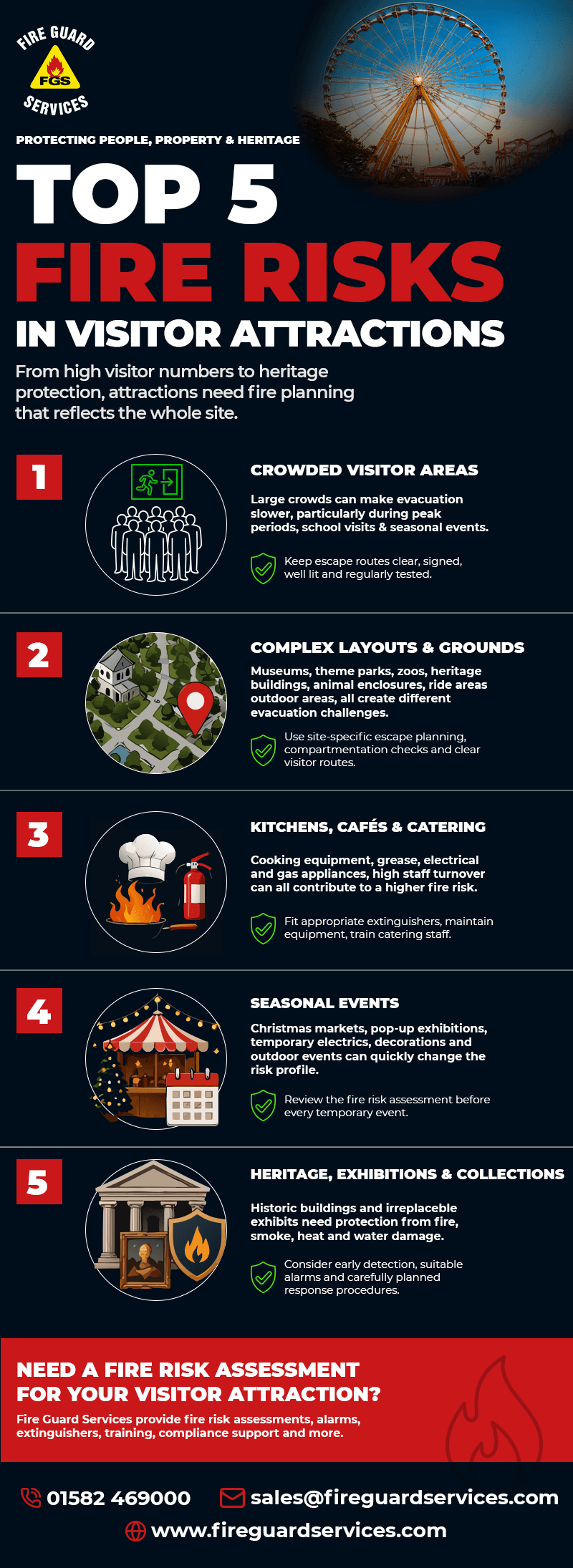
Unlike typical workplaces, attractions present diverse risks:
- Large crowds – safe evacuation for thousands of visitors can be difficult.
- Complex buildings and grounds – heritage sites, animal enclosures, and ride areas each present different hazards.
- High-risk areas – kitchens, gift shops, and technical plant rooms.
- Seasonal events and temporary structures – such as Christmas markets or pop-up exhibitions.
- Protecting heritage and exhibits – irreplaceable items demand special protection.
These challenges require a tailored and proactive fire safety approach.
The infographic below highlights five of the most common fire risks faced by museums, theme parks, zoos, heritage sites, and other visitor attractions.
Fire Alarm Systems for Attractions
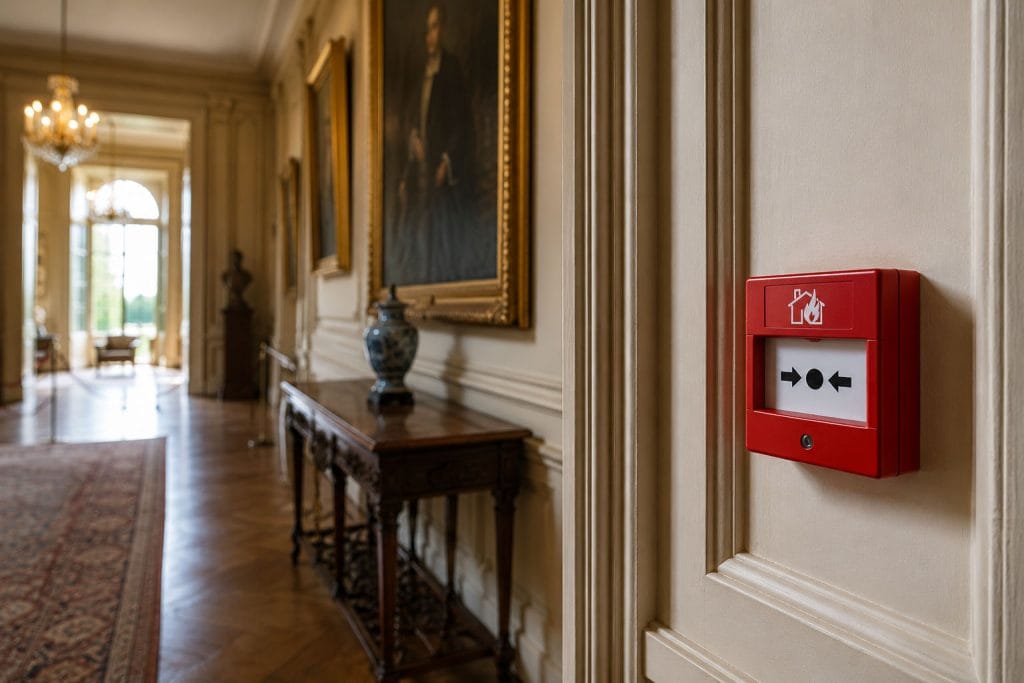
Attractions need alarm systems suited to their scale and complexity:
- Automatic smoke and heat detectors across visitor and staff areas.
- Aspirating smoke detection in heritage sites or sensitive collections where early warning is critical.
- Addressable alarm panels to pinpoint activations quickly in large sites.
- Linked monitoring systems for multi-building or outdoor attractions.
Regular servicing ensures compliance and reliability, even during peak visitor seasons.
Fire Extinguishers and Emergency Equipment
Extinguishers are vital across diverse attraction spaces. Typical requirements include:
- Water and foam extinguishers in public areas and offices.
- CO₂ extinguishers in plant rooms, IT hubs, and control centres.
- Specialist extinguishers (such as wet chemical) in kitchens and catering areas.
Emergency lighting, clear signage, and regularly tested fire doors support safe evacuation in crowded spaces.
Fire Risk Assessments in Visitor Attractions
Every attraction must have a thorough fire risk assessment, which should cover:
- Evacuation strategies for large crowds.
- High-risk facilities such as kitchens, workshops, or animal enclosures.
- Compartmentation and escape routes in complex or heritage buildings.
- Adequacy of alarms, extinguishers, and lighting.
- Event-specific risks (temporary stages, fireworks, seasonal markets).
These assessments must be regularly updated to reflect changing exhibits, visitor numbers, or building use.
Training Staff for Fire Safety
Well-trained staff are crucial in high-footfall environments. Training should include:
- Fire warden training for supervisors and team leaders.
- Evacuation drills that reflect real visitor flows.
- Extinguisher training so staff can safely tackle small incidents.
- Visitor communication procedures to guide large groups calmly during emergencies.
Scenario-based training helps staff handle incidents without panic, protecting both visitors and reputation.
Why Proactive Fire Safety Protects Attractions
For local attractions, fire safety is about safeguarding lives, protecting heritage, and maintaining public trust. A single incident could endanger guests, damage irreplaceable exhibits, and harm reputation.
By combining modern fire alarm systems, strategically placed extinguishers, thorough risk assessments, and well-trained staff, attractions can stay compliant while creating a safe and welcoming environment.
With Fire Guard Services as a partner, attractions gain expert support, tailored solutions, and confidence that every visitor is protected.
Here at Paradise Wildlife Park, we have used Fire Guard Services for many years for all of our fire safety requirements and have always found their service to be reliable, accommodating and professional.
Lynn Whitnall, CEO
Paradise Wildlife Park
Fire Safety at Visitor Attractions: Frequently Asked Questions
Yes. Visitor attractions such as museums, zoos, theme parks, aquariums, heritage sites, and adventure parks should have a suitable and up-to-date fire risk assessment. To support effective fire safety at local attractions, this should consider visitor areas, staff areas, catering spaces, exhibitions, plant rooms, temporary structures, and any site-specific risks.
Get In Touch
Let us know how we can help with your local attraction's fire safety