
Solar Panels and Fire Safety: What You Need to Know
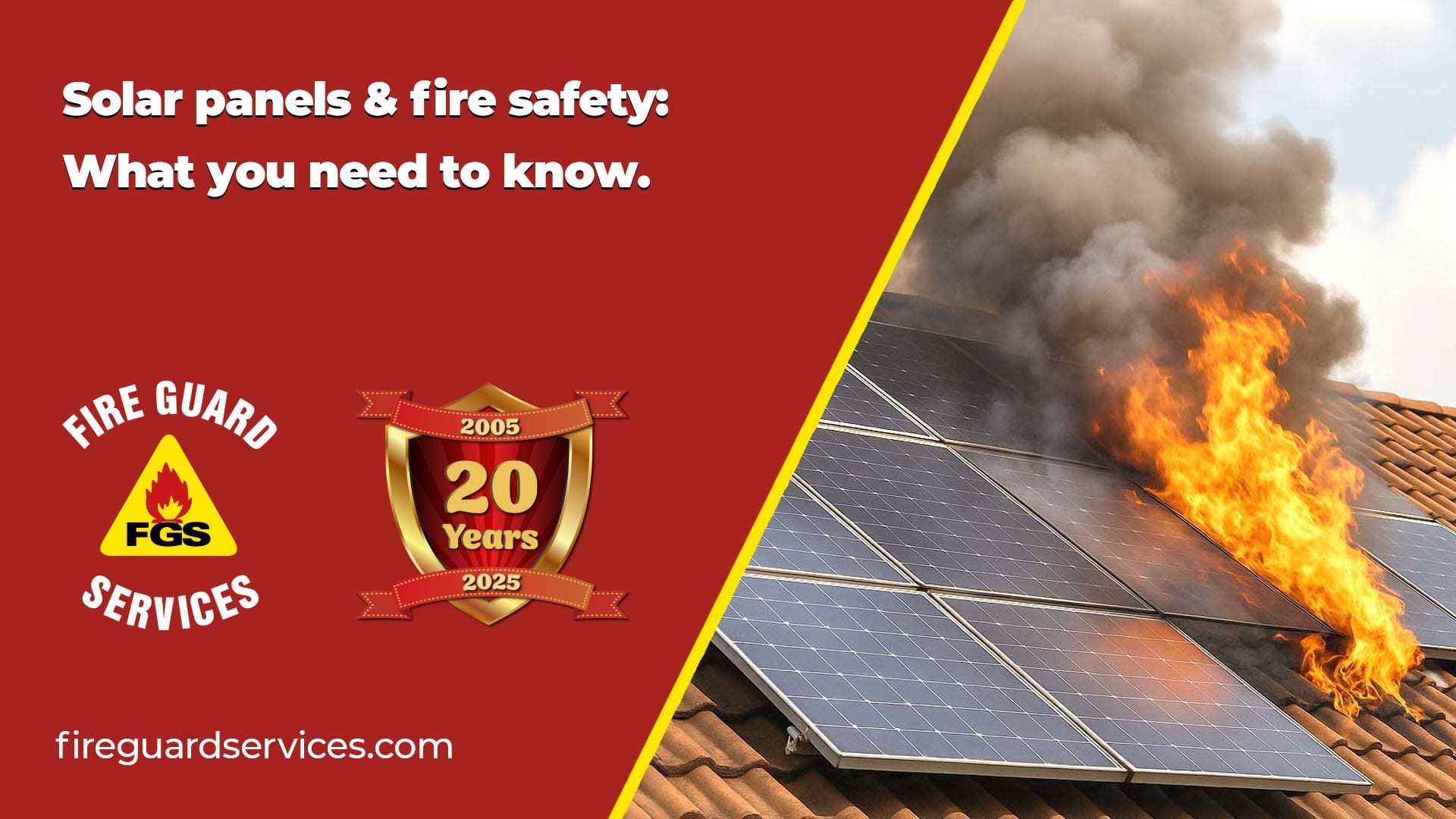
As more homes and businesses across the UK embrace renewable energy, solar panels have become a familiar sight on rooftops. While they offer clear environmental and financial benefits, a recent report from insurer QBE highlights an often-overlooked issue, the growing fire risks associated with solar panel systems.
Understanding the Risk
Modern photovoltaic (PV) systems are complex electrical installations. When designed and maintained correctly, they are generally safe. However, improper installation, faulty components, or inadequate maintenance can lead to dangerous faults, including electrical arcing, overheating, and, in rare cases, fires.
The QBE report warns that incidents linked to solar panels are on the rise, particularly as older or lower-quality systems age. The combination of high voltages, outdoor exposure, and combustible roofing materials increases the potential for ignition if faults occur.
Key Fire Safety Concerns
- Electrical Faults – Poor wiring, damaged cables, or degraded insulation can create electrical arcs capable of igniting nearby materials.
- Inverter and Connector Failures – These system components can overheat if not properly ventilated or maintained.
- Roof Fire Spread – Fires involving solar panels can spread quickly due to their rooftop position, making access difficult for firefighters.
- Shutdown Challenges – Even when power is cut to a building, solar panels may still generate electricity in daylight, complicating firefighting efforts.
How Businesses Can Reduce the Risk
Whether you manage a care home, school, hotel, or housing development, solar panels require the same level of fire safety consideration as any other electrical system. The key is proactive risk management and regular inspection.
Fire Guard Services recommends:
- Comprehensive Fire Risk Assessments – Review how solar PV systems interact with existing fire safety measures. We’ll assess panel location, wiring routes, inverter positions, and potential ignition points.
- Routine Maintenance and Testing – Regular visual inspections, thermal imaging, and electrical testing can identify faults before they become hazards.
- Emergency Planning and Training – Ensure staff understand the risks associated with solar panels, including emergency shutdown procedures and safe evacuation routes.
- Appropriate Fire Detection and Suppression – Install smoke and heat detectors in roof spaces and service areas where solar components are located.
- Clear Signage and Labelling – Mark inverter locations and isolate switches clearly for emergency responders.
How Fire Guard Services Can Help
At Fire Guard Services, we bring decades of frontline experience from the Fire Service to every inspection, installation, and training session. Our team understands both the technical and practical aspects of fire safety — including emerging risks like those from renewable energy systems.
We provide:
- Fire Risk Assessments for properties with solar panel installations.
- Fire Alarm and Detector Systems designed to give early warning in roof or plant areas.
- Fire Safety Training so staff know how to respond quickly and safely in an emergency.
- PAT Testing and Electrical Safety Checks to ensure compliance and peace of mind.
Protecting What Matters Most
Solar energy is a step toward a greener future, but safety must evolve alongside sustainability. As technology changes, so too must our approach to fire prevention and protection.
If your business or organisation has solar panels installed, or is planning to, now is the time to review your fire safety strategy.
👉 Contact Fire Guard Services to schedule a fire risk assessment or compliance review today.
Together, we can help you stay safe, compliant, and sustainable.
Get In Touch
Let us know how we can help