
Fire protection services
Dry Riser Testing & Maintenance
Keep your building’s dry riser ready for firefighters with professional inspection, pressure testing, maintenance and clear certification.
Fire Guard Services carries out six-monthly visual inspections and annual wet pressure tests in line with BS 9990:2015.
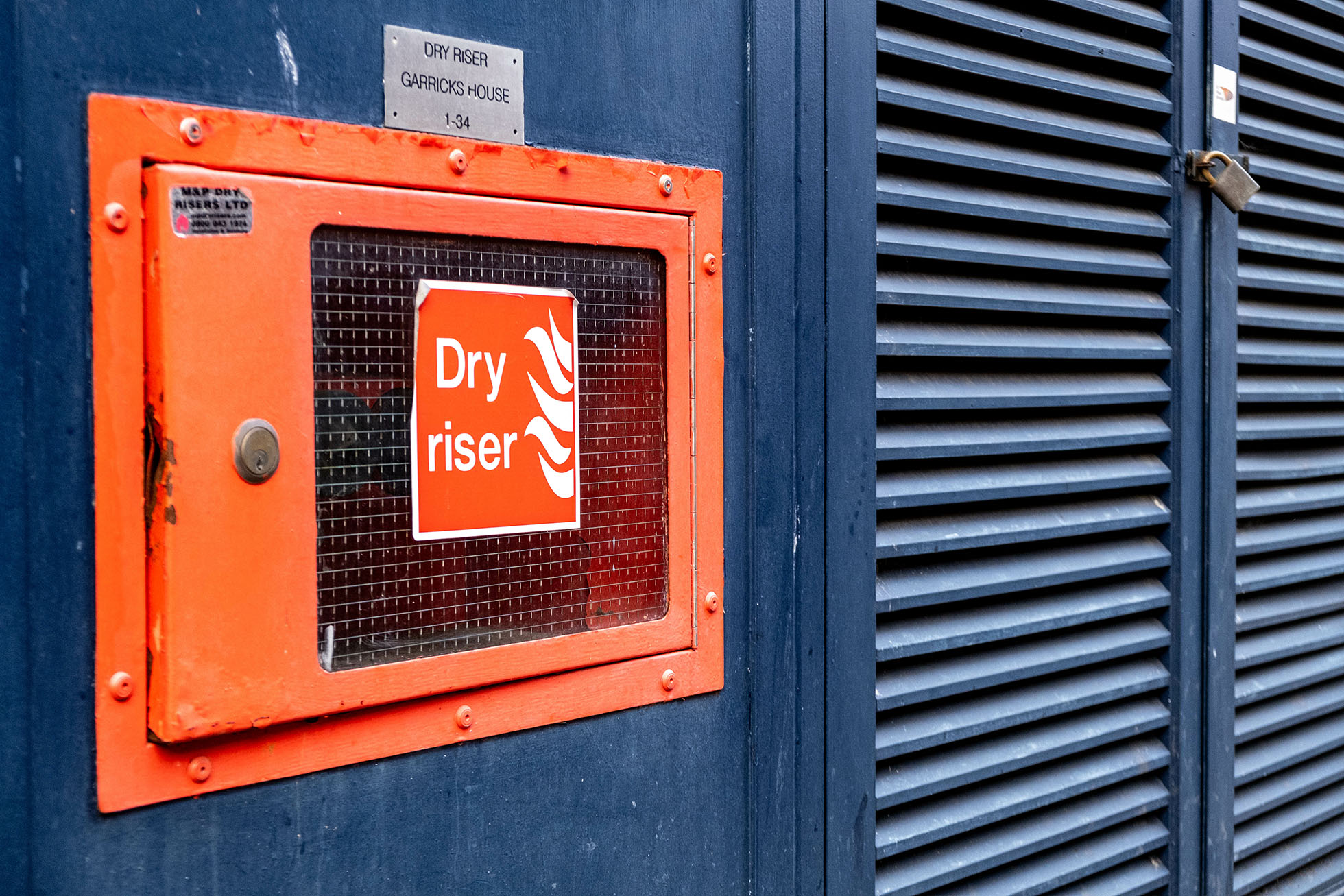
Testing to BS 9990:2015
Inspection, testing and documented results
Why dry risers matter
Reliable access to water
when firefighters need it most.
A dry riser carries water through a building from an external inlet to landing valves on upper floors. Firefighters connect their pump at ground level, reducing the time and effort needed to move water through a taller building.
Supports firefighting operations
Landing valves give firefighters a practical water connection on each served floor.
Protects taller buildings
Dry risers are commonly found in multi-storey residential, commercial and mixed-use buildings.
Finds faults before an emergency
Inspection and pressure testing can reveal leaks, damaged valves, missing components and access problems.
Provides a clear service record
You receive documented results and clear advice about any defects or remedial work identified.
What is included
A thorough dry riser test from inlet to landing valves.
Our engineers inspect the complete installation, test it under controlled conditions and leave it drained, secured and ready for emergency use.
Visual inspection
We check the inlet, landing valves, cabinets, signage, locks and accessible pipework for damage, obstruction or missing parts.
Initial air test
An air pressure check can help identify significant faults before water is introduced, reducing avoidable flood risk.
Wet pressure test
The riser is filled and hydraulically tested to 12 bar for at least 15 minutes so the installation can be checked for leaks and pressure loss.
Drain, secure and report
After testing, the system is drained and valves and cabinets are secured. We record the outcome and identify any required remedial work.
Inspection and testing intervals
Six-monthly checks and annual pressure testing
BS 9990:2015 is the code of practice covering non-automatic fire-fighting systems in buildings, including dry risers. It recommends regular inspection, testing and maintenance by competent people.
Every six months
- Inspect inlets, landing valves and cabinets
- Check locks, straps, signage and access
- Look for damage, corrosion and vandalism
- Record defects and required maintenance
Every 12 months
- Complete the visual inspection
- Pressure test the system with water
- Check the installation for leaks and pressure loss
- Drain, secure and document the system
Your maintenance duty
Fire safety law requires fire-fighting facilities and equipment to be subject to a suitable system of maintenance and kept in an efficient state, efficient working order and good repair. The exact arrangements should reflect the building, its fire risk assessment and any additional duties that apply.
Our process
From access planning to a clear test record
We plan the visit carefully, test the complete dry riser and explain any action needed to keep it ready for emergency use.
01
Step 01
Confirm the system and access
We confirm the riser layout, test history, site access and practical arrangements for introducing and safely draining water.
02
Step 02
Inspect components
Inlets, landing valves, cabinets, signage, locks and accessible pipework are checked before pressure testing begins.
03
Step 03
Pressure test the riser
The installation is filled and held at the specified pressure while our engineer checks for leaks and loss of pressure.
04
Step 04
Drain, secure and document
We drain and secure the system, provide a record of the test and explain any faults or remedial work requiring attention.
Is your dry riser inspection due?
Tell us about your building and existing system, and we will help you plan the appropriate inspection or annual pressure test.
What our clients say
Trusted fire safety support for buildings across the region
Who we support
Dry riser testing for residential, commercial and public buildings.
We support responsible persons, landlords, managing agents and facilities teams responsible for dry risers in individual buildings and wider property portfolios.
Competent testing and maintenance
Clear records for responsible persons
Our engineers provide practical findings and documented results to support your fire safety management and maintenance records.
Automotive
Support fire safety across showrooms, workshops, storage areas and customer-facing dealership spaces.
Car Dealerships
Help protect high-value vehicles, workshops, staff areas and showroom environments.
Care Homes
Support vulnerable residents, staff training, evacuation planning and safe day-to-day care environments.
Distribution & Logistics
Assess warehouses, depots, loading areas, storage risks and operational fire safety arrangements.
Education
Fire risk assessment support for schools, nurseries, colleges, universities and multi-building sites.
Facilities Management
Practical support for facilities teams managing fire safety across complex buildings and sites.
Healthcare
Help protect patients, staff and visitors in clinical, care and healthcare environments.
HMOs/Landlords
Fire safety support for HMOs, shared houses and rented homes. Coordinate assessments, alarms, fire doors, maintenance and remedial work.
Hospitality
Review fire safety risks across guest areas, kitchens, staff spaces and high-occupancy premises.
Hotels
Review guest rooms, escape routes, kitchens, communal areas and staff procedures.
Housing Associations
Help manage fire safety responsibilities across residential buildings, communal areas and tenant spaces.
Lettings Agencies
Support landlords and property managers with rental properties, HMOs and managed blocks.
Places Of Worship
Support safe, accessible spaces for worship, community use, events and shared facilities.
Property Management
Support fire safety compliance across managed buildings, communal areas and multi-property portfolios.
Public Sector
Practical fire risk assessment support for public buildings, community facilities and local authority premises.
Residential/Domestic
Practical fire safety support for homeowners and residents, including smoke detection, fire alarms, electrical checks and fire doors.
Retail
Help protect customers, staff, stock and trading areas with clear fire safety recommendations.
Visitor Attractions
Assess public-facing environments, visitor routes, staff areas, cafés, exhibitions and event spaces.
Do not see your sector?
We protect businesses across every industry – from corner shops to hospitals.
FAQs
Dry Riser Testing FAQs
Straightforward answers to common questions about dry riser inspection, pressure testing, maintenance and certification.
Do you provide a certificate after dry riser testing?
We provide a documented test record confirming the inspection or pressure test carried out and its outcome. Any defects or recommended remedial work are identified clearly so the responsible person can take appropriate action.
How is a dry riser pressure tested?
After an initial inspection and appropriate precautions, the riser is filled with water and hydraulically tested to 12 bar for at least 15 minutes. The engineer checks the pipework, valves and connections for leakage or pressure loss before draining and securing the system.
How often should a dry riser be tested?
BS 9990:2015 recommends a visual inspection every six months and a full wet pressure test every 12 months. Additional checks or maintenance may be appropriate if the system is damaged, altered, used or subject to particular building-safety requirements.
What happens if the dry riser fails its test?
The engineer records the defects and explains the remedial work required. Depending on the fault, this may include replacing valves, seals, caps, locks or signage, repairing pipework, clearing access or repeating the pressure test after repairs.
What is a dry riser?
A dry riser is a normally empty system of vertical pipework with an external fire service inlet at ground level and landing valves on upper floors. Firefighters connect a pump to the inlet so water can be supplied closer to the fire without running long hose lines through the building.
Who can test a dry riser?
Dry riser inspection, pressure testing and maintenance should be carried out by a competent person with suitable knowledge, equipment and experience. The work involves high water pressure and must be planned to protect the building and its occupants.
Check your area
Do We Provide Dry Riser Testing In Your Area?
Enter your UK postcode to check local availability for this service. We also support larger organisations with multiple locations across the UK, so contact us about wider requirements.