
Responsible Person Fire Safety Duties After Grenfell
The Grenfell Tower tragedy changed the direction of fire safety law in England and that impacts Responsible Person duties.
Since then, Responsible Persons have faced tighter legal duties, stronger expectations around record-keeping, and greater pressure to show that fire safety is being managed properly, not just assumed. As of April 2026, the latest change is the introduction of new Residential PEEPs duties from 6 April 2026 for certain higher-risk residential buildings, while earlier reforms from 2023 remain fully in force.
In simple terms, a Responsible Person is usually the employer, owner, landlord, managing agent, or anyone with control over premises or the common parts of a building. If that is you, the law expects more than a basic tick-box exercise. You must understand your fire risks, document them properly, communicate clearly, and take practical action to protect people.
Since 1 October 2023, all Responsible Persons under the Fire Safety Order have had to record the fire risk assessment in full, not just the significant findings. They must also record their fire safety arrangements, take reasonable steps to identify other Responsible Persons in the same premises, cooperate and coordinate with them, and pass relevant fire safety information to any incoming Responsible Person. In buildings containing two or more domestic premises, there is also a duty to give residents relevant fire safety information in a format they can understand.
For residential buildings, earlier Grenfell-related reforms also introduced extra duties from 23 January 2023. In high-rise residential buildings, Responsible Persons must provide floor plans and external wall information to the fire and rescue service, keep hard copies in a secure information box, install wayfinding signage, and carry out monthly checks on firefighting lifts and key equipment. In multi-occupied residential buildings over 11 metres, they must carry out regular fire door checks. In all multi-occupied residential buildings, they must give residents fire safety instructions and information about fire doors.
Now there is another important development. From 6 April 2026, the Fire Safety (Residential Evacuation Plans) (England) Regulations 2025 introduce new duties for Responsible Persons in specified residential buildings. They must take reasonable steps to identify residents who may have difficulty evacuating because of a physical or cognitive impairment, offer those residents a person-centred fire risk assessment, consider and implement reasonable and proportionate mitigating measures, and agree a written emergency evacuation statement where appropriate. Guidance also makes clear that this process should be reviewed regularly and carried out with the resident’s consent.
This is exactly why a professional Fire Risk Assessment is so valuable. A suitable and sufficient assessment does far more than help with compliance. It gives you a clearer picture of your actual risks, highlights deficiencies before they become enforcement issues, supports better resident and staff communication, and creates the written evidence you may need if your procedures are ever questioned by regulators, insurers, or investigators.
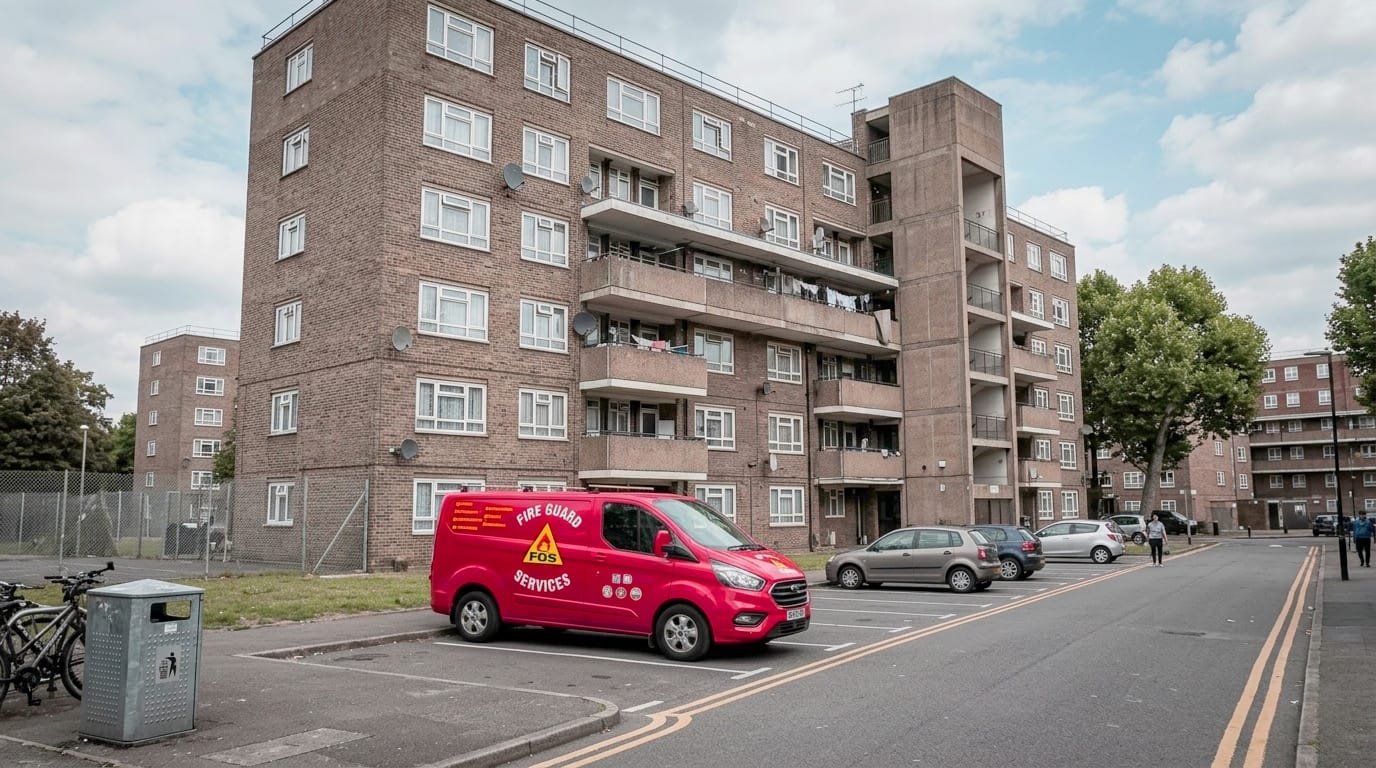
A professional Fire Risk Assessment also helps you take a whole-building view. That matters in shared buildings, residential blocks, care settings, and mixed-use premises where risk can sit across several duty holders. When assessments are carried out properly, recommendations are prioritised, records are easier to maintain, and compliance becomes far more manageable.
At Fire Guard Services, we help Responsible Persons move beyond paperwork and towards practical, defensible fire safety management. If you need support with a professional Fire Risk Assessment, we can help you identify risks, understand your legal duties, and take proportionate action with confidence.
How this affects landlords and managing agents in 2026
For landlords, freeholders, managing agents and property managers, the Responsible Person role is especially important where a building includes communal areas or is used by more than one household. This may include blocks of flats, maisonettes, HMOs, converted houses, mixed-use buildings and residential properties with shared corridors, stairwells, entrance halls, plant rooms or other common parts.
In these situations, the Responsible Person is usually the person or organisation with control over the relevant parts of the premises. That could be the landlord, freeholder, managing agent, property management company, residents’ management company or another party with responsibility for maintenance, repairs or day-to-day safety management.
The key point is that fire safety duties cannot simply be ignored or assumed to sit with someone else. Where more than one party has responsibility for a building, those parties must cooperate, coordinate and share relevant fire safety information.
From a practical perspective, landlords and managing agents should make sure they have:
- A suitable and sufficient fire risk assessment for the parts of the premises they control
- A written record of the fire risk assessment and significant findings
- Clear evidence that fire safety actions have been completed or are being actively managed
- Up-to-date records for fire doors, fire alarm systems, emergency lighting, fire extinguishers and other fire safety measures where applicable
- Clear arrangements for informing residents about relevant fire safety procedures
- A process for reviewing the fire risk assessment when the building, occupancy, layout or fire safety arrangements change
This has become even more important in 2026. The Renters’ Rights Act 2025 is being implemented in phases, with major private rented sector changes taking effect from 1 May 2026. Although the Act does not replace existing fire safety legislation or create a blanket fire risk assessment requirement for every privately rented home, it does increase the wider compliance expectations placed on landlords and letting agents. The government’s implementation roadmap also confirms stronger local authority enforcement, new investigatory powers and a future Private Rented Sector Database designed to help landlords demonstrate compliance.
Fire risk assessments remain a separate but essential duty under the Regulatory Reform (Fire Safety) Order 2005. GOV.UK states that the Responsible Person must carry out and regularly review a fire risk assessment, keep a written record, identify fire hazards and people at risk, reduce risks, record findings, prepare emergency arrangements and review the assessment regularly.
Landlords and managing agents should also be aware of the updated Housing Health and Safety Rating System guidance, published in June 2026. This guidance is aimed at landlords and property-related professionals and explains how risks to health and safety in residential premises are assessed and enforced. Fire risk is therefore not only a Fire Safety Order issue; it can also form part of wider housing standards and enforcement considerations.
For single-let houses and flats, the legal position is different from HMOs or blocks with communal areas. A standard single-family rental property will not usually require the same type of Fire Safety Order assessment as a building with common parts. However, landlords still have important fire safety responsibilities, including smoke alarms, carbon monoxide alarms where required, safe electrical installations, safe appliances, suitable escape routes and appropriate action where hazards are identified.
For HMOs, blocks of flats and managed residential buildings, the need for competent fire safety management is much clearer. A fire risk assessment should not be treated as a one-off document. It should be a live management tool that helps landlords and managing agents identify risks, prioritise remedial works, protect residents and demonstrate that they are meeting their legal duties.
If you are a landlord, freeholder, letting agent or managing agent responsible for residential property, Fire Guard Services can help you understand your duties, assess your fire risks and put practical measures in place to protect residents and remain compliant.
This article provides general fire safety guidance for landlords, managing agents and Responsible Persons in England. It should not be treated as legal advice. Where duties are unclear, seek advice from a competent fire safety professional or appropriate legal adviser.