
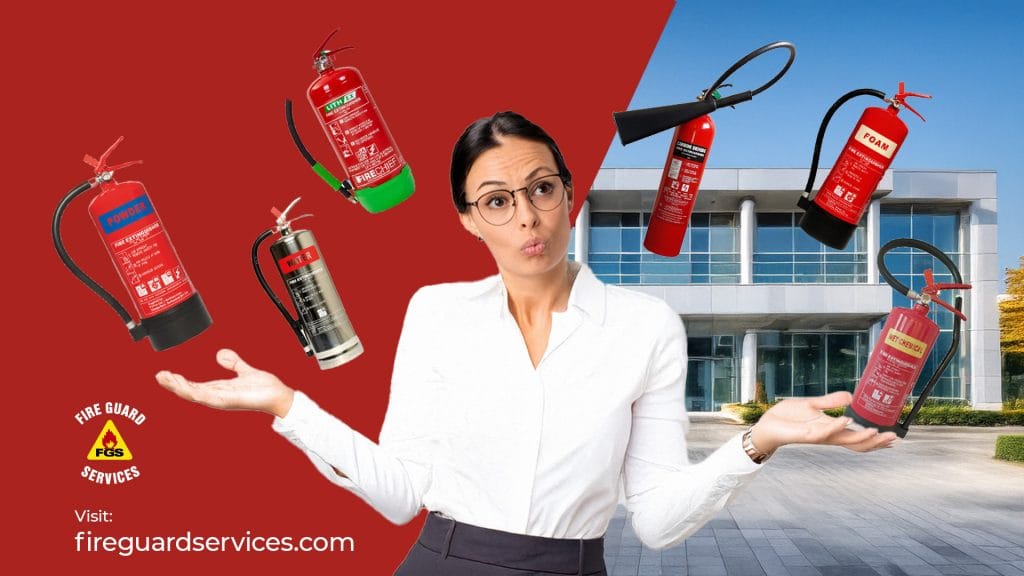
Fire extinguishers are a vital part of fire safety for any business or organisation, but choosing the right type is not always straightforward. The correct provision depends on the fire risks within your premises, the layout of the building, the activities carried out on site and the findings of your fire risk assessment.
Whether you manage an office, retail shop, warehouse, care home, school, hotel, workshop or commercial kitchen, the extinguishers you provide should be suitable for the specific hazards present. Using the wrong type of extinguisher can be ineffective and, in some situations, dangerous.
Under the Regulatory Reform (Fire Safety) Order 2005, the Responsible Person must take appropriate fire safety precautions for their premises. This includes ensuring that suitable fire-fighting equipment is provided, properly installed, tested, maintained and supported by appropriate staff training where required.
## Quick answer: which fire extinguisher does your business need?
Most businesses need a combination of extinguishers matched to the risks identified in their fire risk assessment.
- Offices often require water or foam extinguishers for Class A risks, such as paper, cardboard, wood and textiles, alongside CO₂ extinguishers for electrical equipment.
- Commercial kitchens typically require wet chemical extinguishers for cooking oil and fat fires.
- Workshops, garages, warehouses and industrial premises may need a more specific mix depending on flammable liquids, gases, electrical equipment, vehicles, machinery, battery charging areas or other specialist hazards.
The safest approach is to have your extinguishers specified by a competent fire safety provider, so that the type, number, location and maintenance schedule are suitable for your premises.

A quick guide to common fire extinguisher types, colour bands and typical business uses. The correct provision should always be based on your fire risk assessment.
Understanding Fire Classes
Before selecting a fire extinguisher, it is essential to understand the different classes of fire:
- Class A: Fires involving solid materials such as wood, paper, textiles, and plastics.
- Class B: Fires caused by flammable liquids like petrol, diesel, and oil.
- Class C: Fires involving flammable gases such as propane, butane, and methane.
- Class D: Fires involving combustible metals like magnesium and aluminium.
- Class F: Fires involving cooking oils and fats, common in commercial kitchens.
- Electrical Fires: While not an official fire class, fires involving electrical equipment require special consideration.
- EV Battery Fires: Fires involving lithium-ion batteries, particularly in electric vehicles (EVs), require specialist extinguishers.
Types of Fire Extinguishers and Their Uses
There are six main types of fire extinguishers used in UK businesses. Each type is designed to tackle specific fire classes.
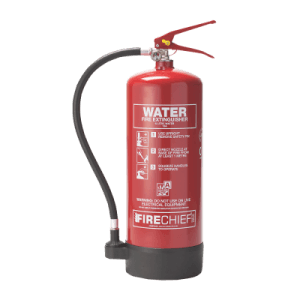
- Water Extinguishers
-
- Suitable for Class A fires.
-
- Not suitable for use on electrical fires or flammable liquids.
-
- Ideal for offices, retail spaces, and warehouses storing combustible materials.
-
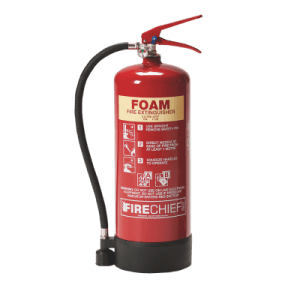 Foam Extinguishers
-
- Effective for Class A and Class B fires.
-
- Not recommended for electrical fires.
-
- Commonly used in offices, shops, and garages.
-
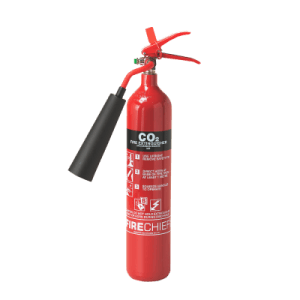 CO2 (Carbon Dioxide) Extinguishers
-
- Designed for electrical fires and Class B fires.
-
- Leaves no residue, making it safe for use around sensitive electronic equipment.
-
- Essential for offices, server rooms, and workshops with electrical machinery.
-
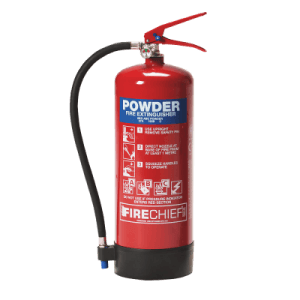 Powder Extinguishers
-
- Suitable for Class A, B, C, and electrical fires.
-
- Effective on multiple fire types but can cause visibility and inhalation issues in confined spaces.
-
- Often found in garages, workshops, and industrial settings.
-
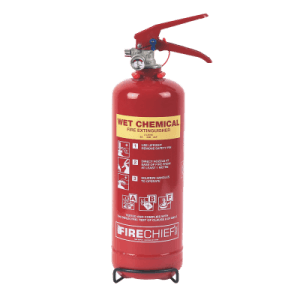 Wet Chemical Extinguishers
-
- Specifically designed for Class F fires (cooking oils and fats).
-
- Creates a cooling foam barrier to prevent re-ignition.
-
- A must-have for commercial kitchens, restaurants, and catering businesses.
-
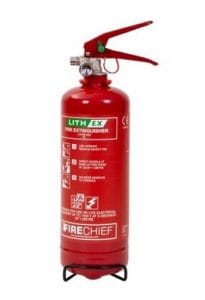 Specialist EV Battery Fire Extinguishers
-
- Designed to tackle fires involving lithium-ion batteries in electric vehicles and other battery-powered devices.
-
- Traditional extinguishers such as CO2 and water are ineffective for these fires, as lithium-ion batteries can reignite even after being extinguished.
-
- Some businesses are investing in Aqueous Vermiculite Dispersion (AVD) extinguishers, which form a cooling barrier to suppress battery fires.
-
- Essential for car dealerships, EV charging stations, fleet management businesses, and workshops servicing electric vehicles.
Legal Requirements for UK Businesses
Under the Regulatory Reform (Fire Safety) Order 2005, the Responsible Person must assess fire risks and ensure suitable fire safety measures are in place. This includes providing appropriate fire-fighting equipment where required. The type, number and location of extinguishers should be based on your premises, fire risks, escape routes, occupancy and the findings of your fire risk assessment.
Fire extinguishers should be accessible, correctly positioned, clearly identified, regularly checked and properly maintained. Staff should also understand what to do in the event of a fire, including when to raise the alarm, evacuate and avoid tackling a fire.
BAFE states that a basic fire extinguisher service should be performed at least annually, and that the Responsible Person has a duty to ensure extinguishers are maintained by a competent person.
How to Choose the Right Extinguisher for Your Business
- Assess Your Risks: Identify the types of fire hazards present in your workplace. A restaurant will need wet chemical extinguishers, while an office with computers should have CO2 extinguishers.
- Ensure Adequate Coverage: Check that you have enough extinguishers for your space, positioned according to fire safety regulations.
- Comply with Regulations: Work with a fire safety professional to ensure you meet all legal requirements.
- Train Your Staff: Employees should know how to locate and operate extinguishers in an emergency.
Having the right fire extinguisher is not just a legal necessity-it’s a crucial element of workplace safety. Choosing the correct type ensures you can respond effectively in the event of a fire, protecting your employees, customers, and business assets. If you’re unsure whether your fire safety measures are up to standard, consulting a fire protection specialist can provide peace of mind and keep your business compliant.
Fire safety is everyone’s responsibility. Take the time to review your fire extinguishers today-before you need them in an emergency.
Feel free to email us or call us on 01582 469000 for a free assessment, training and more.
Which fire extinguishers are commonly used in different businesses?
| Business type | Common risks | Typical extinguisher considerations |
|---|---|---|
| Offices | Paper, furniture, electrical equipment | Water or foam plus CO₂ |
| Schools, Colleges | Classrooms, kitchens, labs, plant rooms | Mixed provision by area |
| Care Homes | Bedrooms, kitchens, laundries, electrical equipment | Risk-based provision, staff training and regular servicing |
| Hotels | Guest areas, kitchens, laundries, plant rooms | Mixed provision with clear signage and staff training |
| Workshops/garages | Vehicles, oils, fuels, machinery, electrical risks | Foam, CO₂, powder or specialist equipment depending on risk |
| Restaurants/cafés | Cooking oils, electrical equipment, general combustibles | Wet chemical, CO₂ and suitable Class A cover |
Fire extinguisher types and colours: FAQs
What are the main types of fire extinguishers used in UK businesses?
The most common fire extinguisher types used in UK business premises are water, foam, CO₂, dry powder and wet chemical extinguishers. Some premises may also require specialist extinguishers for specific risks, such as lithium-ion batteries, metal fires or other high-risk processes. The correct provision should always be based on your fire risk assessment.
What do fire extinguisher colours mean?
In the UK, most fire extinguishers are red with a coloured label or band to show the type of extinguishing agent inside. Water extinguishers have a red label, foam has a cream label, CO₂ has a black label, dry powder has a blue label, and wet chemical has a yellow label.
Which fire extinguisher should be used for electrical equipment?
CO₂ extinguishers are commonly used for fires involving electrical equipment because they leave no residue and do not conduct electricity. However, the correct extinguisher provision depends on the equipment, environment and fire risk assessment. Electrical equipment should be isolated if it is safe to do so.
Which fire extinguisher is used for cooking oil fires?
Wet chemical extinguishers are designed for Class F fires involving cooking oils and fats. They are commonly used in commercial kitchens, restaurants, cafés, canteens and catering environments. Water, foam, CO₂ and standard powder extinguishers should not be used on cooking oil fires unless the extinguisher is specifically rated for that risk.
Can dry powder extinguishers be used indoors?
Dry powder extinguishers can be highly effective on several fire types, but they can reduce visibility and create inhalation issues when discharged. For that reason, they are not usually recommended for general indoor use unless a risk assessment shows they are appropriate for the specific environment.
How often should business fire extinguishers be serviced?
Business fire extinguishers should normally be serviced at least once a year by a competent person. The Responsible Person should also ensure regular visual checks are carried out so that extinguishers remain in the correct location, are accessible, have not been discharged or damaged, and show no obvious signs of tampering.
How do I know if my business has enough fire extinguishers?
The number and type of extinguishers required depends on your building layout, fire risks, escape routes, floor area, occupancy and business activities. A competent fire safety provider can assess your premises and advise on the correct extinguisher types, quantities and locations.
Who is responsible for fire extinguishers in a business?
The Responsible Person is responsible for ensuring that suitable fire safety measures are in place. This may be the employer, owner, landlord, occupier, facilities manager, managing agent or another person with control of the premises. Their duties include ensuring that fire-fighting equipment is suitable, maintained and available where required.
Need Help Choosing The Right Extinguishers?
Contact us for a no obligation advice
"*" indicates required fields
Phone
This field is for validation purposes and should be left unchanged.
Name*
First
Last
Email*
Phone
Your message*
Your post code
How did you hear about us?
Please choose one …
Google search
Recommendation / word of mouth
Existing customer
Trade website or directory
Saw your vehicle or signage
Other (please specify)
Other referral
Would you like to get fire safety advice, tips and news to your inbox?
Yes please