
Would Your Staff Know What to Do? Seven Signs Fire Safety Training Needs Refreshing
Fire safety training and equipment matter, but people still need to recognise a warning and respond correctly. In an emergency there is no time to search for a procedure or decide who should take charge. Training turns written arrangements into confident action.
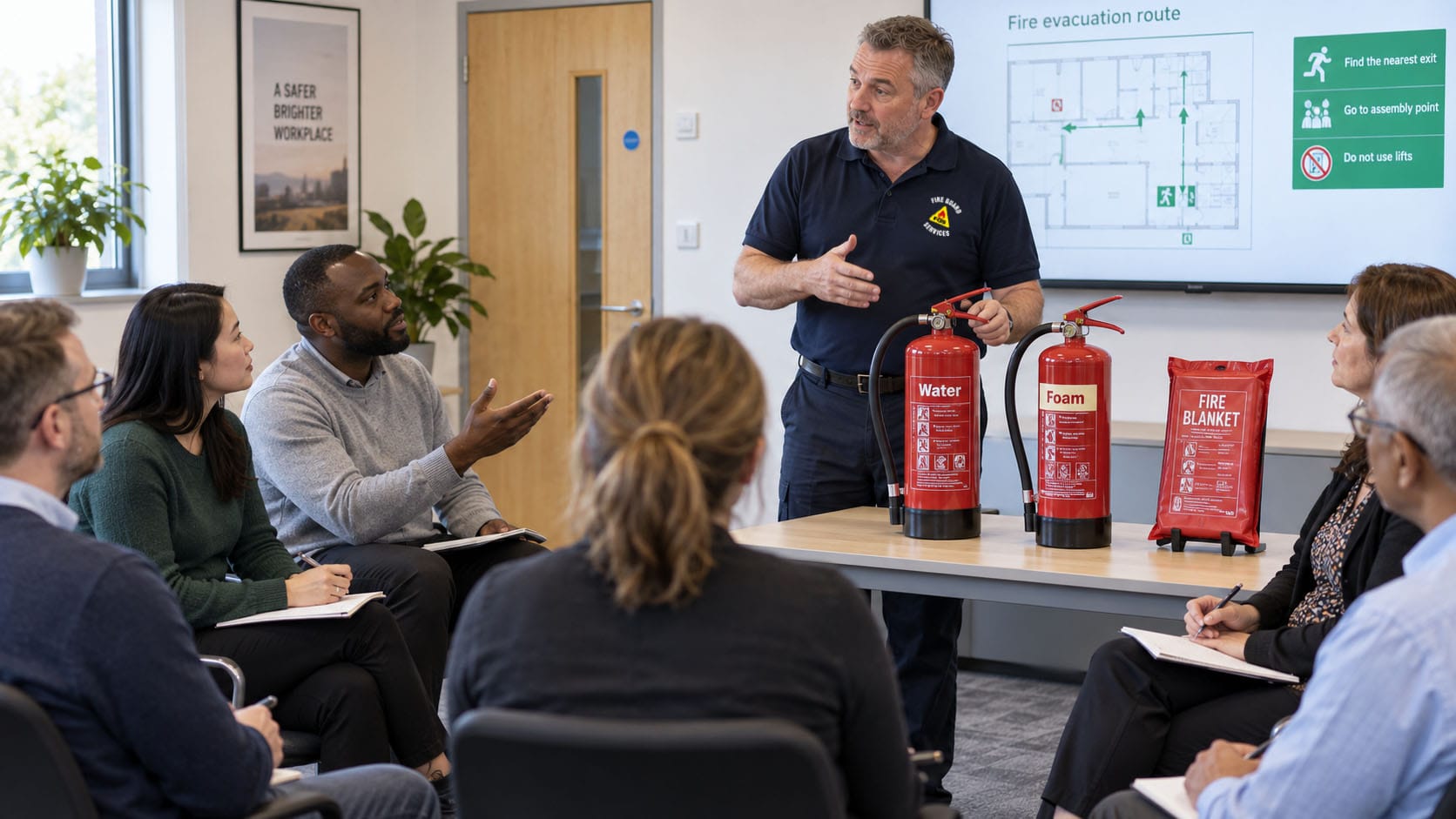
Employers must provide appropriate fire safety information, instruction and training. The content and frequency should reflect the risks, workforce and changes within the organisation. These seven signs suggest it is time for a refresh.
- New starters are learning informally
A quick tour from a colleague is not a reliable substitute for planned induction. New staff should understand the alarm, escape routes, assembly arrangements, reporting process and any role they have during an evacuation. Temporary, agency and contract workers also need relevant information. - Staff cannot explain what the alarm sounds like
Some sites use different alarm signals, staged evacuation or special arrangements in particular areas. If employees are unsure whether a sound means test, alert or evacuation, the procedure is not sufficiently understood. - Fire warden coverage no longer matches working patterns
Hybrid working, shift changes, holidays and staff turnover can leave parts of a building without trained cover. Review who is normally present at different times. Fire wardens need clear duties, appropriate training and deputies; they should not be given responsibilities that put them at risk. - The workplace has changed
New partitions, machinery, stock, work processes or tenants can affect hazards and escape arrangements. Staff need updated information when changes alter routes, alarm zones, assembly points or emergency responsibilities. - Drills expose confusion
A drill that produces slow reactions, people collecting belongings, use of the wrong exits or uncertainty at the assembly point is valuable evidence. Record what happened, identify why and use targeted training to correct it. A drill should test the plan, not simply complete a calendar entry. - Nobody is confident about assisting others
Arrangements must consider people who may need help to evacuate. Relevant staff should understand personal emergency evacuation plans, available equipment and the limits of their role. Plans should be practical for the building and tested appropriately. - Records show a long gap or repeated non-attendance
Training records help managers see who has been briefed and when. A long gap does not automatically mean training is inadequate, but it should prompt a review. Repeated absences, changed responsibilities or evidence that knowledge has faded are stronger reasons to refresh. Plan refresher training at intervals informed by your fire risk assessment, and bring it forward when risks, responsibilities or staff understanding change.
What effective fire safety training should achieve

People should know how to prevent fire, raise the alarm, leave by a safe route, support the evacuation arrangements and report hazards.
Those expected to use fire extinguishers require suitable instruction and must understand that personal safety comes first. Training should be relevant to the actual workplace rather than a generic presentation.
The best test is simple: could every person on site explain what they would do if the alarm sounded now? If the answer is uncertain, address the gap before a real emergency exposes it.
Fire Guard Services delivers professional fire safety and fire warden training.
Call 01582 469000 or email sales@fireguardservices.com to discuss your team.