
Seven Warning Signs That a Fire Door Needs Professional Attention
A fire door is part of a building's passive fire protection. When correctly specified, installed and maintained, it helps resist the spread of fire and smoke so people have more time to escape and the building's fire strategy can work as intended.
Fire doors are often used many times a day, so damage and unauthorised alterations can develop gradually.
A simple visual check can identify concerns, but it does not replace inspection by a competent person. Report these seven warning signs promptly.
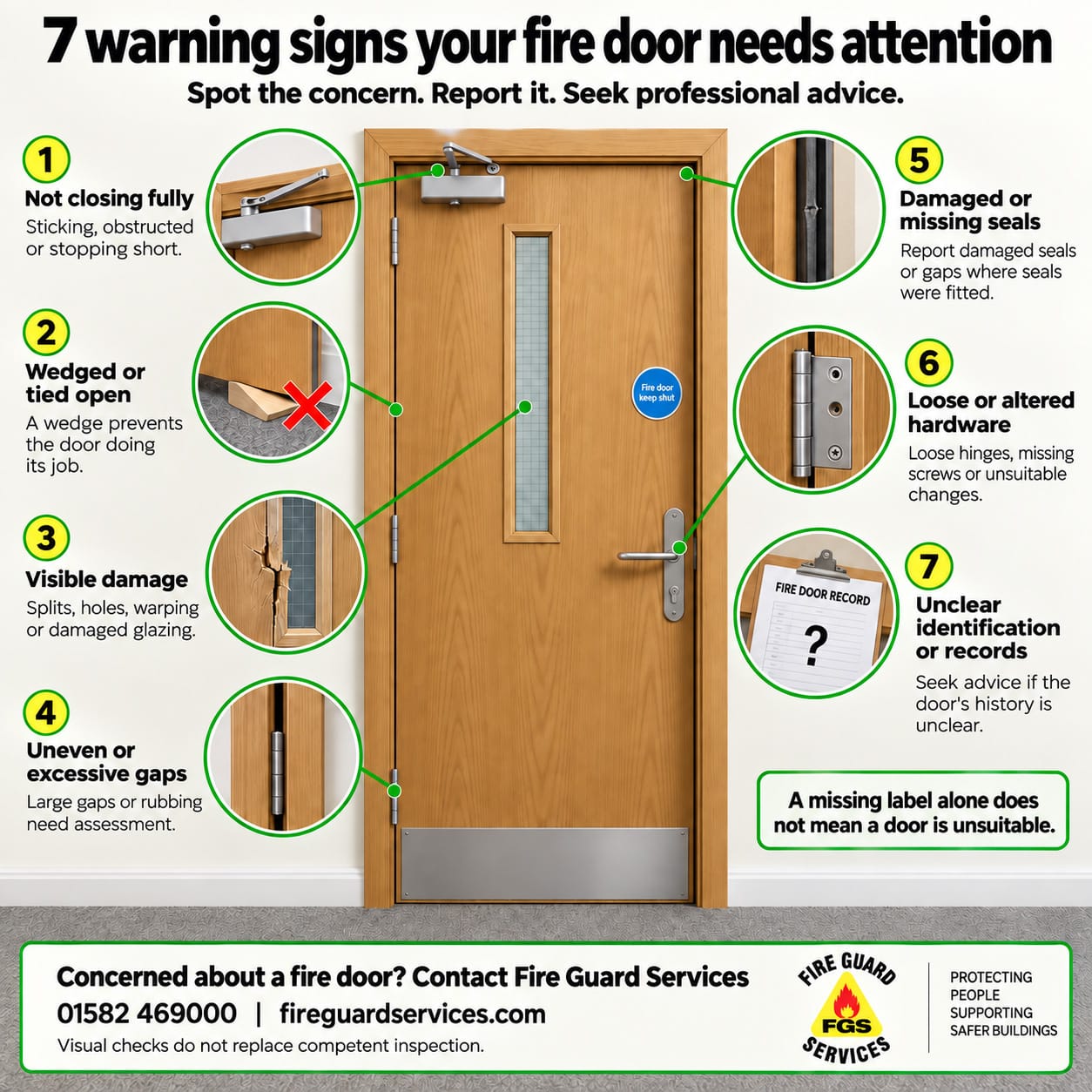
1. The fire door does not close fully
Open the door and allow the self-closing device to operate. The leaf should close into the frame without sticking or being held short by flooring, a mat, latch fault or obstruction. A door left even partly open cannot provide the protection expected of it.
2. The fire door is wedged or tied open
A wedge defeats the purpose of a self-closing fire door. If operational needs make a door inconvenient, seek competent advice about an appropriate hold-open device linked to the fire alarm; do not improvise.
3. There is visible damage
Look for holes, splits, warped sections, damaged glazing, loose hinges or impact damage to the leaf and frame. Damage can affect performance even when the door still opens and closes. Repairs must use suitable methods and components.
4. Gaps appear excessive or uneven
The gaps around a fire door are important to its performance. A visibly large or inconsistent gap, or a door rubbing against the frame, needs assessment. Do not rely on guesswork or attempt to plane the door without understanding its construction and certification.
5. Seals are missing, damaged or painted over
Intumescent and smoke seals may be fitted around the leaf or frame depending on the door set. Loose, cut, missing or heavily painted seals should be reported. Replacement products need to be suitable for the particular door.
6. Hardware has been altered or is loose
Closers, hinges, latches, locks, letter plates, glazing and other ironmongery form part of the door assembly. Missing screws, non-closing latches, unsuitable replacements or newly drilled openings can compromise performance. Alterations should be specified and completed by competent people.
7. Identification or maintenance records are unclear
Labels or plugs can help identify a certified fire door, although the absence of a visible mark does not by itself prove that an existing door is unsuitable. What matters is that the responsible person understands the door provision, checks it at appropriate intervals and records defects and remedial work.
What to do when you find a concern with a fire door
Do not ignore it and do not make an unverified repair. Record the location, take a clear photograph if your procedure allows, prevent further damage and report it to the responsible person or building manager. Defects affecting closing or obvious damage may require urgent action.
Fire door checks work best as part of a wider system that includes an up-to-date fire risk assessment, competent inspection, appropriate maintenance and clear information for building users. Everyone can help by keeping doors closed and reporting damage; technical decisions belong with competent professionals.
Concerned about fire doors in your building?
Fire Guard Services provides professional fire door services across the region. Call 01582 469000 or email sales@fireguardservices.com.