
Student Accommodation Fire Safety: A Guide for Landlords, Agents and Property Managers
September brings thousands of students into shared houses, halls and purpose-built accommodation.
For landlords, agents and property managers, move-in is an important opportunity to confirm that fire safety measures are working and residents understand how to use the building safely.

The precise legal and technical requirements depend on the type, size and layout of the premises.
Houses in multiple occupation, converted buildings and purpose-built blocks can require different approaches, so arrangements should be based on an appropriate fire risk assessment and relevant housing requirements.
Confirm the fire risk assessment is current
Review the fire risk assessment before occupation and whenever there are significant changes to the building, occupancy or management arrangements. Outstanding actions need clear owners and completion dates. Common areas, plant rooms, bin stores, cycle storage and any commercial areas within a mixed-use building should not be overlooked.
Test detection and warning systems
The fire alarm system and smoke detectors must be appropriate for the accommodation and provide an effective warning to occupants. Complete required testing and servicing, investigate faults promptly and keep records. Never assume that residents will recognise an unfamiliar alarm; explain what it sounds like and what they should do.
Protect escape routes and fire doors
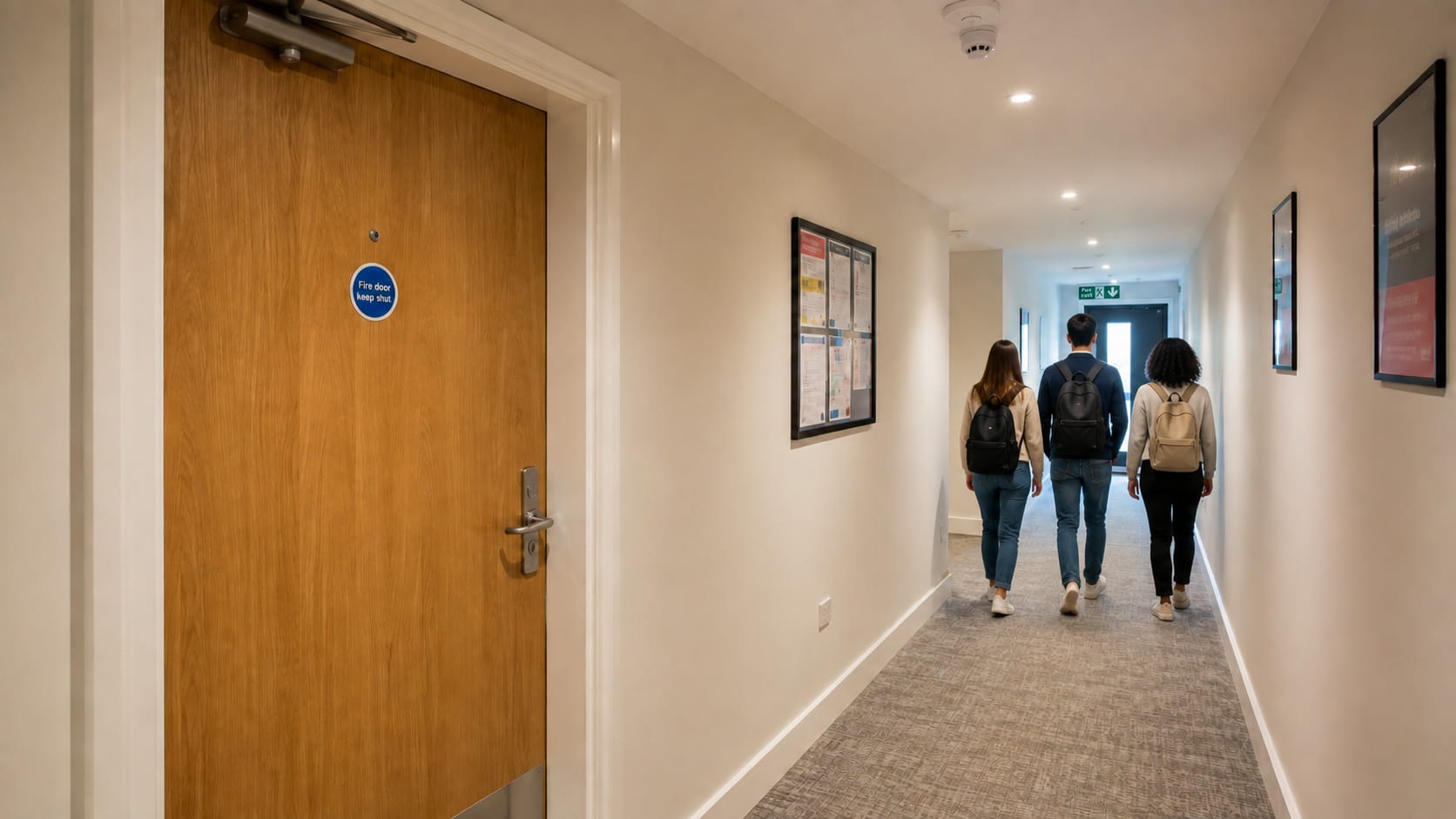
Corridors, stairs and final exits must remain clear. Furniture, bicycles, scooters, refuse and deliveries can obstruct escape and add fuel to a fire. Fire doors should close properly and must not be wedged open. In blocks of flats, residents should receive clear information about the importance of keeping fire doors shut and reporting faults.
Manage electrical and battery risks
Student rooms can contain laptops, games consoles, cooking appliances, extension leads and multiple chargers. Provide clear rules about prohibited equipment and safe charging. E-bikes and e-scooters should not be charged or stored in escape routes. Damaged, modified or incompatible batteries and chargers present a particular concern. Residents should stop using equipment that overheats, swells, smells unusual or shows damage and report it immediately.
Explain the evacuation strategy
Residents need information specific to their building. Some purpose-built blocks use a stay-put strategy, while other accommodation requires simultaneous evacuation. Generic instructions can be dangerous if they conflict with the building strategy. Display clear notices, explain the assembly arrangements where applicable and ensure residents know how to call the fire and rescue service.
Consider every resident
Management arrangements should take account of anyone who may need assistance, including people with mobility, sensory or cognitive impairments. Information should be accessible, and suitable evacuation arrangements should be developed where necessary rather than waiting for an emergency.
Maintain good housekeeping
Provide safe refuse and recycling arrangements and prevent combustible material accumulating in common areas. Laundry facilities, kitchens and plant rooms need suitable controls. Regular inspections help identify propped-open doors, damaged equipment or changes in how residents are using the building.
Keep evidence of good management
Records should cover alarm testing, emergency lighting, servicing, fire door checks, inspections, resident information and action taken after faults are reported. Good documentation supports continuity when staff or managing agents change and helps demonstrate that issues are being managed.
The first few weeks of occupation set expectations for the year. Clear information, responsive maintenance and competent assessment help residents feel confident while protecting landlords and managers from preventable risk.
Fire Guard Services supports landlords, letting agents and student accommodation providers across the region.
Call 01582 469000 or email sales@fireguardservices.com to discuss your properties.