
The September Fire Safety Reset: A 15-Minute Workplace Checklist
September often feels like a second start to the business year. Teams return from holidays, new employees arrive and workplaces become busier. It is an ideal moment for a short, September workplace fire safety reset.
This 15-minute visual check is not a replacement for a suitable and sufficient fire risk assessment or professional servicing. It is a simple way to spot obvious changes and confirm that routine arrangements have not slipped.
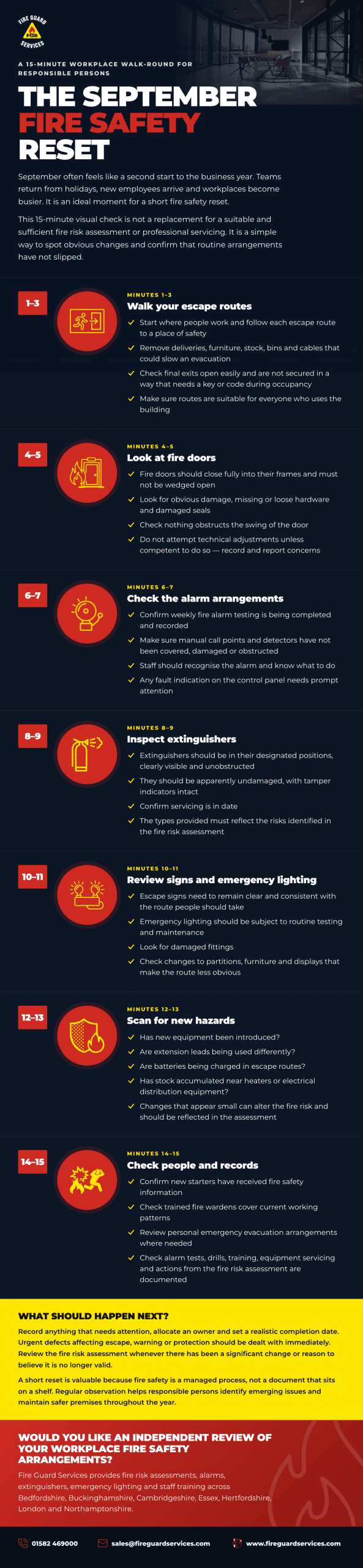
Minutes 1-3: walk your escape routes
Start where people work and follow each escape route to a place of safety. Remove deliveries, furniture, stock, bins and cables that could slow an evacuation. Check that final exits open easily and are not secured in a way that requires a key or code during occupancy. Make sure routes are suitable for everyone who uses the building.
Minutes 4-5: look at fire doors
Fire doors should close fully into their frames and must not be wedged open. Look for obvious damage, missing or loose hardware, damaged seals and objects obstructing the swing of the door. Do not attempt technical adjustments unless you are competent to do so; record and report concerns.
Minutes 6-7: check the alarm arrangements
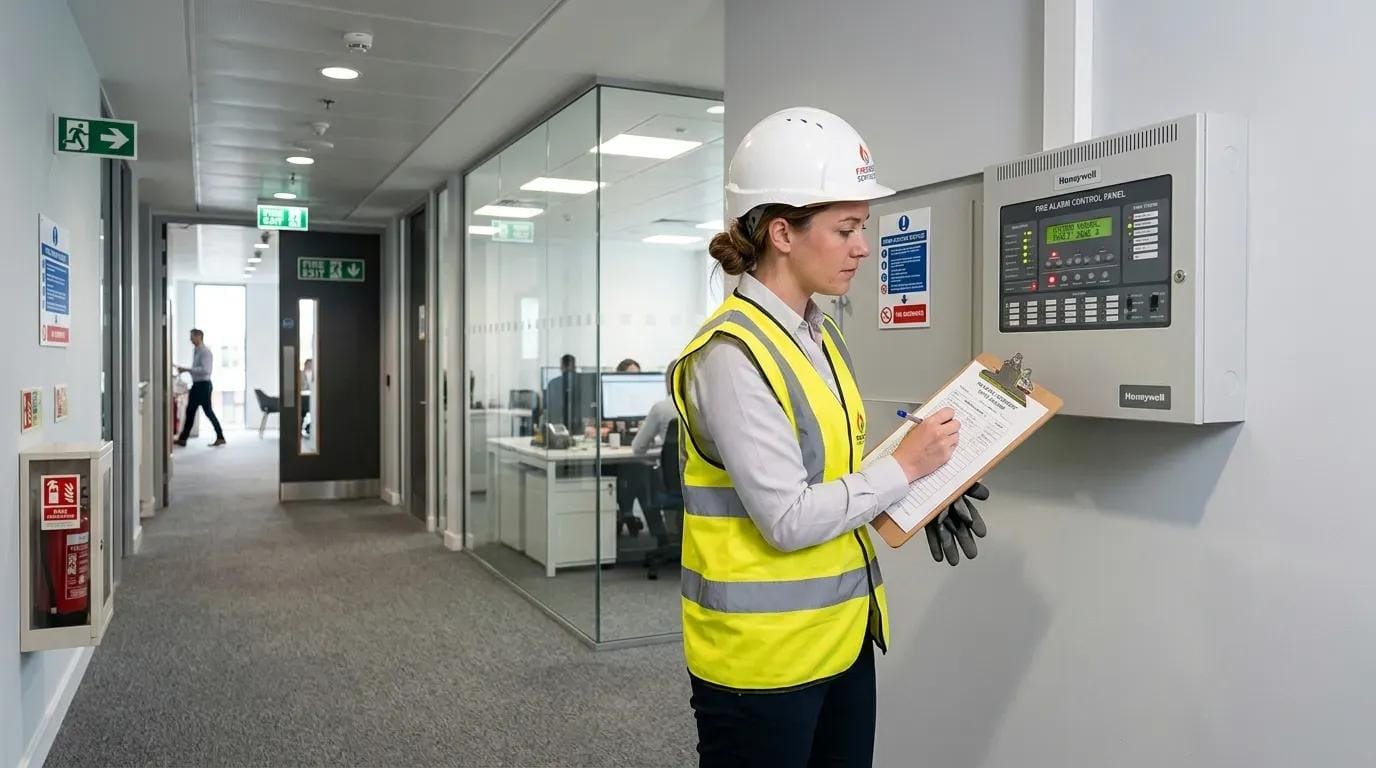
Confirm that weekly fire alarm testing is being completed and recorded. Make sure manual call points and detectors have not been covered, damaged or obstructed. Staff should recognise the alarm and know what to do. Any fault indication on the control panel needs prompt attention.
Minutes 8-9: inspect extinguishers
Fire extinguishers should be in their designated positions, clearly visible, unobstructed and apparently undamaged. Check that tamper indicators remain intact and servicing is in date. The types provided must reflect the risks identified in the fire risk assessment.
Minutes 10-11: review signs and emergency lighting
Escape signs need to remain clear and consistent with the route people should take. Emergency lighting should be subject to routine testing and maintenance. Look for damaged fittings or changes to partitions, furniture and displays that make the route less obvious.
Minutes 12-13: scan for new hazards
Has new equipment been introduced? Are extension leads being used differently? Are batteries being charged in escape routes? Has stock accumulated near heaters or electrical distribution equipment? Changes that appear small can alter the fire risk and should be reflected in the assessment.
Minutes 14-15: check people and records
Confirm that new starters have received fire safety information and that trained fire wardens cover current working patterns. Review personal emergency evacuation arrangements where needed. Check that alarm tests, drills, training, equipment servicing and actions from the fire risk assessment are documented.
What should happen next?
Record anything that needs attention, allocate an owner and set a realistic completion date. Urgent defects affecting escape, warning or protection should be dealt with immediately. Review the fire risk assessment whenever there has been a significant change or reason to believe it is no longer valid.
A short reset is valuable because fire safety is a managed process, not a document that sits on a shelf. Regular observation helps responsible persons identify emerging issues and maintain safer premises throughout the year.
Download the September Fire Safety Checklist PDF(opens in new tab)
Would you like an independent review of your workplace fire safety arrangements?
Call Fire Guard Services on 01582 469000 or email sales@fireguardservices.com.