
Building protection services
Lightning Protection Testing & Inspection
Protect people, property and critical systems with a clear assessment of your lightning protection system.
We visually inspect accessible components, test earth termination points and provide findings to help you plan maintenance in line with the system design and relevant standards.
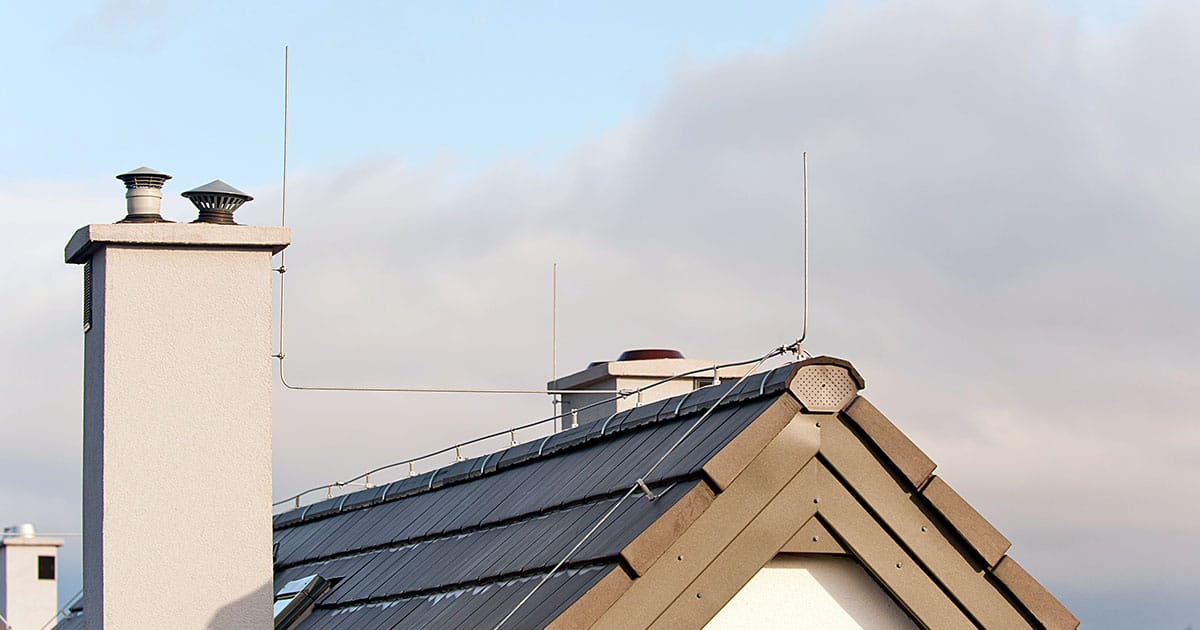
Inspection, testing and reporting
Practical findings for planned maintenance
Why lightning protection matters
A system only protects effectively when its condition is known.
Exposure, corrosion, building work and accidental damage can affect a lightning protection system. Periodic inspection helps identify defects before they compromise the intended protection.
Checks the protection path
Examines accessible air terminations, conductors, joints and earth terminations for continuity and condition.
Identifies deterioration
Highlights corrosion, loose connections, damage and changes that may affect performance.
Supports maintenance records
Provides documented findings and test results to support responsible maintenance decisions.
Protects people and assets
Helps reduce risk to occupants, the building fabric, electrical systems and business-critical equipment.
What the service includes
A structured inspection from rooftop conductors to earth terminations.
The precise scope depends on the system, premises, access and available records. We agree limitations in advance and focus on the components that can be inspected and tested safely.
Air termination network
Visual checks of accessible rods, tapes, meshes, fixings and other components intended to intercept a strike.
Down conductors and joints
Checks accessible conductor routes, bonds, test clamps and connections for damage, security and corrosion.
Earth termination testing
Measures accessible earth termination points and records results for comparison with the system design and earlier tests.
Records and labelling
Reviews available drawings, previous reports, test-point identification and changes affecting the installed system.
Clear findings
Explains defects, limitations and recommended next actions so responsible persons can plan remedial work.
Standards and responsible maintenance
Inspection should reflect the system, the premises and the risk.
BS EN 62305 provides the framework for lightning protection, including inspection and maintenance. The Electricity at Work Regulations 1989 are also relevant where electrical systems and work activities must be maintained to prevent danger.
The right inspection frequency is not a guess: it should consider the protection level, environment, exposure to corrosion, structural alterations and previous findings. A competent person should confirm the appropriate regime for the installed system.
Arrange an earlier inspection after
- A known or suspected lightning strike
- Roof, façade or structural alteration
- Damage, corrosion or disconnected conductors
- A change affecting sensitive equipment or building use
Our process
From system records to practical next steps
We coordinate safe access, inspect and test the system, then explain the findings so you can maintain protection with confidence.
01
Step 01
Review the system
We confirm the premises, system type, available drawings and reports, access requirements and any known changes.
02
Step 02
Inspect accessible components
The engineer visually examines the accessible protection network, connections, fixings, bonding and earth terminations.
03
Step 03
Test and record
Appropriate continuity and earth termination measurements are completed and compared with relevant information.
04
Step 04
Report and plan
You receive documented findings, agreed limitations and recommended actions for maintenance or further investigation.
What our clients say
Trusted inspection and compliance support for responsible organisations
Who we support
Lightning protection testing for commercial and managed premises.
We support dutyholders, landlords and facilities teams responsible for offices, warehouses, education, hospitality, care and other managed buildings.
Practical compliance support
Testing shaped around the installed system
System design, protection level, exposure, building alterations and previous findings all influence the inspection scope and maintenance plan.
Automotive
Support fire safety across showrooms, workshops, storage areas and customer-facing dealership spaces.
Car Dealerships
Help protect high-value vehicles, workshops, staff areas and showroom environments.
Care Homes
Support vulnerable residents, staff training, evacuation planning and safe day-to-day care environments.
Distribution & Logistics
Assess warehouses, depots, loading areas, storage risks and operational fire safety arrangements.
Education
Fire risk assessment support for schools, nurseries, colleges, universities and multi-building sites.
Facilities Management
Practical support for facilities teams managing fire safety across complex buildings and sites.
Healthcare
Help protect patients, staff and visitors in clinical, care and healthcare environments.
HMOs/Landlords
Fire safety support for HMOs, shared houses and rented homes. Coordinate assessments, alarms, fire doors, maintenance and remedial work.
Hospitality
Review fire safety risks across guest areas, kitchens, staff spaces and high-occupancy premises.
Hotels
Review guest rooms, escape routes, kitchens, communal areas and staff procedures.
Housing Associations
Help manage fire safety responsibilities across residential buildings, communal areas and tenant spaces.
Lettings Agencies
Support landlords and property managers with rental properties, HMOs and managed blocks.
Places Of Worship
Support safe, accessible spaces for worship, community use, events and shared facilities.
Property Management
Support fire safety compliance across managed buildings, communal areas and multi-property portfolios.
Public Sector
Practical fire risk assessment support for public buildings, community facilities and local authority premises.
Residential/Domestic
Practical fire safety support for homeowners and residents, including smoke detection, fire alarms, electrical checks and fire doors.
Retail
Help protect customers, staff, stock and trading areas with clear fire safety recommendations.
Visitor Attractions
Assess public-facing environments, visitor routes, staff areas, cafés, exhibitions and event spaces.
Do not see your sector?
We protect businesses across every industry – from corner shops to hospitals.
FAQs
Lightning Protection FAQs
Clear answers about lightning conductor testing, inspection frequency, standards, earth testing and what happens after the visit.
How are lightning protection systems tested?
A competent engineer visually inspects accessible components and connections, checks the system against available design and maintenance information, and carries out appropriate measurements. This commonly includes earth termination testing and, where the system design and access allow, continuity checks.
How often should a lightning protection system be inspected?
The appropriate interval depends on the system design, protection level, environment, exposure to corrosion, previous findings and relevant guidance. BS EN 62305 sets out inspection and maintenance principles. A competent person should confirm the regime for your installed system, with additional inspections after events such as structural alteration or a suspected strike.
Is lightning conductor testing a legal requirement?
There is not one simple rule imposing the same test interval on every building. Dutyholders must manage relevant risks and maintain safety systems appropriately. BS EN 62305 provides the recognised framework for lightning protection, while the Electricity at Work Regulations 1989 may apply to electrical systems in workplaces. Obtain competent advice for your premises and system.
What happens if the inspection finds a defect?
The report should identify the defect, its location and the recommended next action. Depending on the finding, this may involve repairing a loose or corroded connection, reinstating a conductor, investigating an earth termination or reviewing changes to the building. Remedial work should be agreed separately and recorded when complete.
Should the system be checked after building work?
Yes. Roof work, extensions, new plant, cladding changes and other alterations can affect conductor routes, separation distances, bonding or the system design. Arrange a review when work may have changed the protection system, even if the next routine inspection is not yet due.
Can lightning protection testing disrupt the premises?
Most of the work is inspection and measurement rather than intrusive construction, but access may be needed to roofs, test clamps and earth pits. We agree access, safety controls and operational constraints before the visit so disruption can be managed.
Check your area
Do We Provide Lightning Protection Testing In Your Area?
Enter your UK postcode to check local availability for this service. We also support larger organisations with multiple locations across the UK, so contact us about wider requirements.